In the present time, productivity is the prize people chase. Most people have this desire to be alert and fully functional 24/7. Humans, since time immemorial, have experimented with techniques that could help them stay alert for longer. From ancient times when warriors would use herbal preparations to modern warfare, where soldiers consume pills to do the job. There has always been a curiosity within us to understand how our sleep-wake states are related and what mechanisms set them apart from each other and look for ways in which we can enhance our wakefulness.
In the modern capitalist backdrop, we don’t just chase wakefulness out of temporary optimization but out of a necessity to complete our tasks and try to have a life outside our professional lives. While this isn’t a healthy line of thinking, the science of wakefulness is interesting enough to engross us.
In this blog, we take a look at our brain activity during wakefulness, how the brain regulates alertness, and which medications have been formulated for this.
What Does Wakefulness Look Like?
When most people think of wakefulness, they think of the absence of sleep. Wakefulness and sleep are so complementary that they’re mostly thought of together. Wakefulness is when your body is at its most alert stage and you are conscious of yourself and your surroundings. Wakefulness is a state that happens on a daily basis when a person processes the sensory information and inputs in their environment and responds accordingly to them.
Most people treat being awake like the default setting. Sleep is the thing that happens to them, and wakefulness is whatever’s left over. It turns out to be closer to the other way around. Keeping a brain awake and staying alert on top of that is an active job, with clusters of neurons in the brainstem and the hypothalamus firing away, nudging the rest of the brain to keep the lights on.
Staying alert during the day is a continuous task that an individual partakes in. There is stuff like sleep pressure, i.e., the buildup of adenosine and our body clocks, which help put our bodies to sleep and have that function play out.
Brain Chemicals That Promote Wakefulness
A handful of brain chemicals that promote wakefulness do most of the heavy lifting. Dopamine, norepinephrine, histamine, and a peptide called orexin (some texts may say hypocretin). Each one has its own territory, and they overlap in complex ways that researchers are still sorting out.
Orexin is the interesting one. It’s made in the hypothalamus, and it basically keeps the wake system from flopping over. Low orexin signaling is linked with narcolepsy, which is why that condition causes such sudden, heavy sleepiness.
Norepinephrine is more like the alarm bell. Histamine is the reason old-school allergy pills made people drowsy, since they blocked it. None of this is a switch, by the way. It’s more like a dimmer, sliding up and down all day.
Brain Activity During Wakefulness
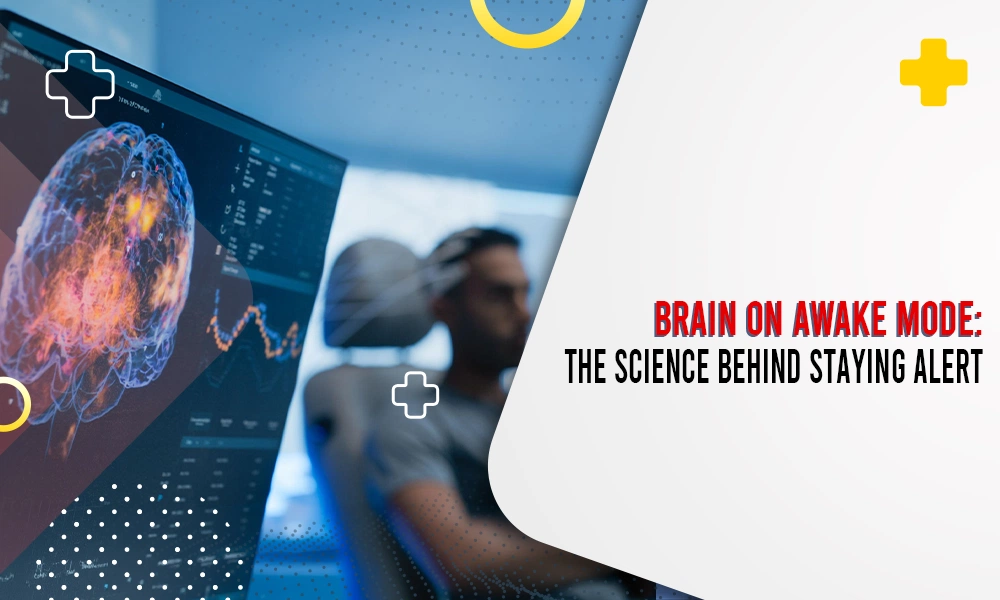
Brain activity during wakefulness looks fast and kind of scrambled on an EEG, lots of quick, low-amplitude waves. That scrambled look is actually a good sign, because it means different regions are busy with different things at once. Sleep, especially deep sleep, swaps that for big, slow, synchronized waves.
The prefrontal cortex sits in the middle of the awake stuff. Planning, attention, holding a thought for more than a few seconds. It’s also one of the first places to struggle when someone is short on rest, which explains the forgetting-why-they-walked-into-the-room thing.
Attention drifts even in a well-rested brain, honestly. Drifting is normal. The trouble starts when it drifts and doesn’t come back.
How Sleep Affects Cognitive Performance
Sleep and wakefulness regulation is really one system with two modes, so it makes sense that wrecking one wrecks the other. A bad night doesn’t just make a person tired. It shows up in reaction time, memory, mood, and even how risky decisions feel.
How sleep affects an average individual’s cognitive performance is one of the better studied areas in the field, and the pattern is pretty consistent. Less sleep results in slower thinking and more mistakes. And the part that surprises people is that the sleep-deprived often can’t tell how impaired they are. They feel “fine, mostly” while the test scores say otherwise.
Then there’s the structure of the night itself. Sleep cycles and brain function are tied together, with lighter stages, deep slow-wave sleep, and REM repeating in loops of about 90 minutes. Deep sleep seems to matter for physical recovery and memory consolidation, and REM for emotional processing and learning. Cut the night short, and the later cycles, which are heavy on REM, get chopped first. Nobody notices that part until a few days of it stack up.
Staying alert on five hours of sleep works for a day or two, and then it really doesn’t. The brain can’t fake its way around missing sleep for long.
Factors Affecting Mental Alertness
The factors affecting mental alertness are mostly just your mundane daily-life stuff. Most of what wrecks staying alert looks like normal life. Poor sleep, obviously. Irregular schedules. Dehydration. Skipping meals, or the opposite, a huge lunch. Too little light in the morning, too much screen light at night, stress, certain medicines, and alcohol, even a bit, or even hours earlier, can all affect your mental alertness.
Some of it is medical. Sleep apnea breaks up the night without the person ever fully waking, so the day gets taken over by sleepiness, and staying alert can get tricky for them. Narcolepsy is another, and so is shift work disorder, where the body clock and the work schedule just refuse to line up. Those are the cases where being tired isn’t a lifestyle problem anymore. It’s a health one.
How To Improve Mental Alertness
Staying alert during the day mostly comes down to basic everyday habits. Daylight early on helps. Moving around helps, even a short walk. A regular wake time helps more than people expect, probably more than the bedtime does. Caffeine works, up to a point, and then it starts costing sleep later, which makes tomorrow worse. This can be a classic loop that many individuals find themselves stuck in.
Short breaks matter too. The brain holds attention in bursts, and pushing through hours without a pause tends to give worse work, not more of it. This can also help individuals in staying alert during the day.
For people who are simply wiped out, a lot of the advice is really about maintaining focus and concentration without burning through the reserves, and sometimes that means fixing the sleep first and everything else second.
How Can Medications Help You Stay Alert
Some people have the habits sorted, and staying alert is still a fight. That’s where medication sometimes enters the picture. Modafinil and armodafinil are popular pharmaceutical options that are typically considered in this field.
Armodacare 250 mg is an armodafinil tablet, a wakefulness-promoting medicine. Armodafinil is the R-isomer of modafinil and is typically recommended for adults with excessive sleepiness linked to narcolepsy, obstructive sleep apnea (OSA), or shift work disorder.
How it works isn’t fully pinned down, and the official labeling says as much. It binds to the dopamine transporter and slows dopamine reuptake, which leaves more dopamine around, and there’s evidence it touches other systems too, including histamine, norepinephrine, and orexin pathways. So it isn’t a classic stimulant in the amphetamine sense, even though the end result is more wakefulness.
A couple of things stay true no matter what. Armodacare 250 mg isn’t a substitute for sleep. It also doesn’t treat the underlying condition. For sleep apnea, for example, the breathing problem still needs its own treatment, and armodafinil only deals with the leftover sleepiness.
When Should You Speak To Your Doctor
Armodacare 250 mg isn’t something to start casually or to borrow from a friend or to use just to push through a deadline week. A medical professional needs to look at the whole picture first. Heart conditions, blood pressure, mental health history, other medicines, and pregnancy plans. There are all the factors that have to be considered before one starts taking armodafinil.
Common side effects can include headache, nausea, dizziness, and trouble sleeping. Rarely, serious skin reactions and allergic responses have been reported, and a new rash is something to report straight away. It can also interact with hormonal birth control and some other drugs, which is another reason the pharmacist and doctor should know everything the person takes.
The right dose and timing are the prescriber’s call, not something to guess online.
Staying alert, in the end, is the brain doing a hard job with a lot of moving parts. Most of the time sleep, light, and routine carry it. When they don’t, and sleepiness hangs around anyway, that’s probably a conversation for a physician, and Armodacare 250 mg is one of the options that might be brought up.
Frequently Asked Questions
1. Why does staying alert get harder in the afternoon?
The body clock has a natural dip in the early afternoon, and it stacks on top of sleep pressure that’s been building since morning.
2. Does caffeine really help with staying alert?
It blocks adenosine, so sleepiness feels lighter for a while. It doesn’t replace actual rest.
3. What is Armodacare 250 mg used for?
It’s a prescription armodafinil tablet for excessive sleepiness tied to narcolepsy, sleep apnea, or shift work disorder.
4. Can Armodacare 250 mg replace sleep?
Armodacare 250 mg does promote wakefulness, but the body still needs a good amount of sleep.
5. What are the possible side effects of Armodacare 250 mg?
Common side effects with Armodacare 250 mg in people include headache, nausea, dizziness, dry mouth, and insomnia.