Sleep researchers have spent decades poking at this question and honestly, they still argue about parts of it. REM (Rapid Eye Movement) sleep is the stage where most of the vivid dreaming happens. Not all of it. Some dreaming happens in other stages too, which is a detail people tend to skip over. But it is the one everyone talks about, the one with the twitching eyes and the weirdly still body.
There’s something almost contradictory about REM sleep. The brain is buzzing, almost as active as when you’re awake, but the muscles go slack. Paralyzed, more or less. Scientists call this REM atonia. It’s the body’s way of stopping you from acting out whatever nonsense your brain is cooking up. Mostly it works. Sometimes it doesn’t, and that’s where sleep paralysis or REM behavior disorder comes in.
What Happens During REM Sleep?
The sleep cycle usually goes from light sleep, deeper sleep, then REM, repeating every 90 minutes or so through the night. The first REM period might only last ten minutes. By early morning, some REM stretches run closer to 30, even 40 minutes. Which is probably why people report their most memorable dreams right before waking up; you’re just spending more time there by then.
Brain activity during Rapid Eye Movement sleep looks a lot like waking activity on an EEG (Electro encephalography). Theta waves, some fast activity, a lot of noise in the visual and emotional centers. Heart rate goes up and down unevenly. Breathing gets irregular. It’s not the calm, quiet picture people imagine when they think “sleep.” Deep sleep is the quiet one. REM is loud, in its own internal way.
There’s also the eye movement part, obviously, which gives the stage its name. Nobody’s fully sure why the eyes move like that. One theory says it’s tracking dream imagery. Another says it’s just leftover neural firing with no real purpose. Both explanations get repeated in textbooks like they’re settled facts, which they’re not really.
How REM Sleep Affects Brain Function?
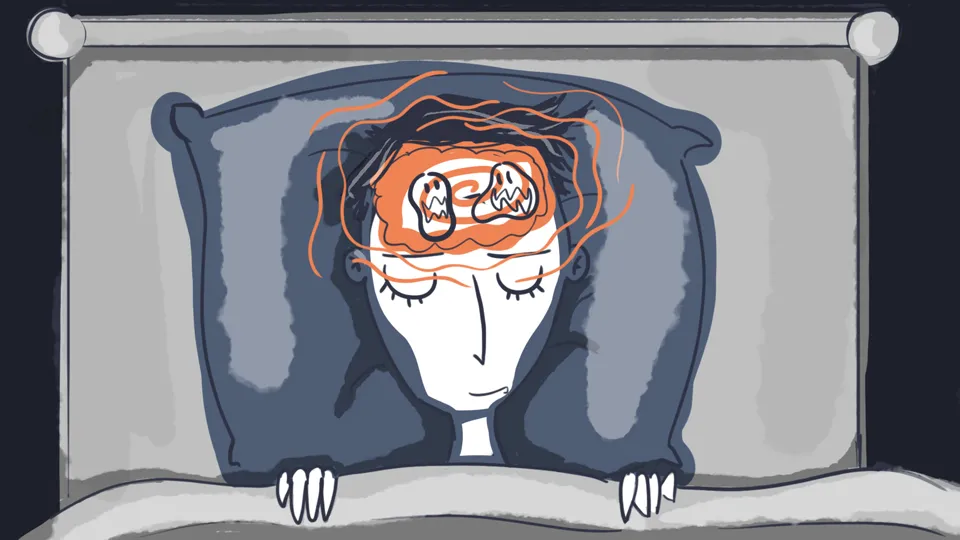
REM is tied to memory consolidation-moving stuff from short-term storage into longer-term storage, especially emotional memories and procedural skills like learning a new movement or task. Deep sleep handles more of the factual, declarative memory side. REM leans emotional and procedural. That split isn’t perfectly clean though, and some studies push back on how strict the division actually is.
There’s this idea floating around that it helps the brain sort emotional experiences, sort of processing them so they don’t feel as raw the next day. Which sounds nice and tidy. Real life data is messier. People who get REM-disrupted sleep, through alcohol or certain medications, often report feeling emotionally frayed the next day.
Why Do You Feel Tired After Enough Sleep?
People assume eight hours guarantees you’ll wake up fine. Doesn’t always work that way. If Rapid Eye Movement sleep gets cut short or fragmented waking up mid-cycle, say, or an alarm going off during a REM stretch you can sleep a full eight hours and still feel groggy. Sleep quality matters as much as quantity, maybe more, though quantity obviously isn’t irrelevant either.
Sleep inertia is the term for the foggy feeling right after waking. Worse if you’re pulled out of deep sleep, but REM interruption plays a role too. The brain sort of needs to finish what it’s doing before it can hand control back over smoothly. Interrupt it mid-thought and things feel off for a while.
Sleep and Daytime Alertness: The Connection Nobody Explains Well
Daytime alertness depends on a mix of things: total sleep time, sleep architecture (how the stages are distributed), circadian timing, caffeine, stress, etc. It specifically seems to influence how sharp and reactive the brain feels later in the day. Studies using sleep deprivation; cutting REM specifically through selective awakenings show people scoring worse on attention tasks, reaction time tests, that kind of thing.
Some argue REM loss itself causes the alertness drop; others say REM loss is just a marker of generally poor sleep, and the real culprit is the disrupted sleep overall, not REM specifically. Both camps have decent evidence. This is one of those areas where the science hasn’t fully settled, and probably won’t for a while.
Importance of REM Sleep for the Developing and Aging Brain
Infants spend around 50% of their sleep in REM. Adults? Closer to 20-25%. That drop happens gradually across childhood. Researchers think REM in infancy supports brain wiring-building neural connections during a period of massive growth. Makes sense on paper. It is difficult to prove directly in humans for obvious ethical reasons, so a lot of this comes from animal studies, which don’t always translate perfectly.
On the other end, Rapid Eye Movement sleep tends to decrease with age. Older adults often get less REM and lighter sleep overall. Some researchers link this decline to memory and cognitive changes seen with aging, though again-correlation, not full proof. Aging brains change for a hundred reasons, and untangling how much sleep architecture matters versus other factors is genuinely difficult.
Benefits of REM Sleep
Dreaming gets all the attention because it’s the flashy, memorable part. This type of sleep does other things quietly in the background. Emotional regulation, as mentioned. Memory processing. Possibly some role in creative problem-solving; there’s research suggesting people wake from REM better at solving certain types of puzzles, ones requiring unusual connections between ideas. Not every study replicates this cleanly, so it’s fair to treat it as a promising lead rather than settled fact.
There’s a theory that this sleep helps regulate mood over time, independent of any single night’s rest. Chronic REM disruption through certain antidepressants, alcohol use, sleep disorders gets associated with mood problems in some populations. Sleep and mood have this circular relationship where poor sleep worsens mood and poor mood worsens sleep, and figuring out which started first is nearly impossible in most real-world cases.
How Poor Sleep Affects Concentration?
Concentration takes a hit fast when sleep gets disrupted, and this sleep specifically seems tied to sustained attention: the kind needed for longer tasks, not just quick reflexes. Short-term reaction speed might bounce back after a rough night’s sleep once caffeine kicks in. Sustained focus doesn’t recover as easily. People report feeling “fine” attention-wise for the first hour of the day but crashing hard by midafternoon, which lines up with research on cumulative sleep debt affecting cognitive performance over the course of a day, not just immediately after waking.
Relationship Between Sleep and Cognitive Performance, Zoomed Out
Cognitive performance is a broad bucket: memory, attention, decision-making, processing speed. It touches several of these but not equally. Memory consolidation, especially procedural and emotional memory, shows the clearest links. Decision-making and processing speed show weaker, more inconsistent links to REM specifically, and seem more tied to total sleep time and sleep continuity overall.
This is probably the least satisfying section to read because there’s no clean takeaway. Sleep science rarely delivers one. The honest summary is: Rapid Eye Movement sleep matters for cognition, but it’s one piece among several, and separating its individual contribution from general “good sleep” is still an active area of research, not a closed book.
Why Quality Sleep Is Important for the Brain?
Sleep quality isn’t just about hours logged. It’s about getting through full cycles, including adequate REM, without constant interruption. A person sleeping seven broken hours might function worse than someone sleeping six and a half uninterrupted hours. Not always, but often enough that sleep specialists bring it up constantly.
REM sleep, specifically, seems to need those later sleep cycles to really stretch out. Which means going to bed late and cutting sleep short from the front end costs you proportionally more REM than losing the same amount of time from the back end. Something to consider, though obviously real life doesn’t always allow for perfect timing.
Frequently Asked Questions
1. What is REM sleep?
REM sleep is a sleep stage marked by rapid eye movement, high brain activity, and most vivid dreaming. Occurs in cycles through the night.
2. How much REM sleep do adults need?
Roughly 20-25% of total sleep time, which usually works out to about 90 minutes to two hours nightly.
3. What is REM vs deep sleep?
REM sleep and deep sleep are two distinct parts of sleep. Deep sleep restores your body physically. Rapid Eye Movement sleep restores your body emotionally.
4. Does REM sleep affect memory?
Yes, particularly emotional and procedural memory consolidation, though factual memory relies more on deep sleep.
5. Can you function without enough REM sleep?
Short term, yes, somewhat. Long term, chronic REM loss is linked to mood and cognitive issues in research.