Most of us, in our lives, have pulled an all-nighter here or there. Most of us have always somewhat regretted them too. An all-nighter can leave you extremely woozy for the rest of your day, and as you age, they become harder and harder to pull. Now, just imagine if you had to routinely keep yourself up during several nights. It’s quite hard for most of us.
Some individuals may be night owls and may prefer working later in the afternoon or evenings, but staying up late consistently due to working night shifts affects the body and brain in more ways than we can imagine. Your brain and your body tend to follow an internal clock that regulates your alertness, hormones, digestion, temperature, and sleep. Working night shifts and staying up can throw these processes out of sync and mess a few things up for most people, especially those who prefer working during the early hours of the day.
The good news is that making yourself familiar with your internal clock and the changes it may bring if dysregulated can help you make small adjustments to help it get back on track.
How Does Working Night Shifts Affect Your Brain, Body, and Sleep?
Sleep is the factor that’s the most obvious to most people. The effects of working night shifts on your sleep are quite instantaneous and explicit. Someone who’s been working night shifts might register the night in pieces. They’re not fully awake when the sun rises and the world gets moving. Irregular sleep patterns and a person’s well-being don’t really mix that well.
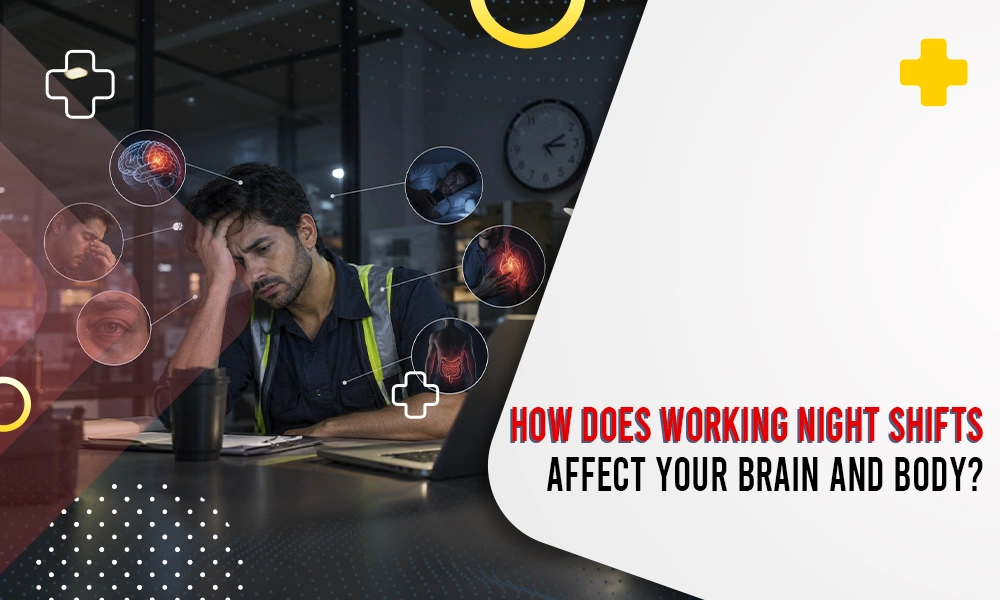
The brain tends to take the hit early. Studies on working nights and brain function keep landing in roughly the same spot. Individuals who work night shifts often exhibit slower reaction times, shakier memory, and attention that drifts right when it’s needed. Mistakes may start creeping in around 4 a.m., even if the person thinks they’re fine.
Then there’s the body. Digestion expects food in daylight, so a 2 a.m. meal can sit there like a brick. Blood sugar handles late meals worse, too. Most people are at risk of experiencing heartburn, constipation, and stomach cramps. All these signs can be quite common, though plenty of night workers just shrug and blame the vending machine.
The drive home is its own problem. Drowsy driving is no joke, and that commute after a long shift is exactly when the tiredness finally lands.
What Are the Short-Term and Long-Term Health Effects of Working Night Shifts?
Short-term stuff is easy to spot. You may experience headaches or irritability or may catch a cold quite often. Within a few weeks of working night shifts, most people notice they’re leaning on caffeine harder than planned, then wondering why sleep won’t come when it’s finally allowed.
The bigger picture takes longer to show up.
The effects of night shift work on health pile up quietly, and the long-term effects of working night shifts are the part that makes researchers nervous. There are incidences of higher rates of heart disease, type 2 diabetes, weight gain, and depression that turn up in a lot of the data. In 2019 the International Agency for Research on Cancer went as far as to list night shift work as a probable cause of cancer in humans. It’s an official carcinogen in the present day.
That does sound pretty scary, and understandably so. However, risk isn’t destiny, and correlation isn’t causation. But the pattern is there, and ignoring it doesn’t make it go away.
Some night workers end up with something called shift work disorder, which is basically constant sleepiness plus insomnia that refuses to quit. This is where medications might enter the picture.
How Do Night Shifts Disrupt Your Circadian Rhythm and Mental Health?
The body runs on a clock of roughly 24 hours, driven by a tiny part of the brain that reads light. Light helps a person’s body get the message to be awake. Dark says to wind down and release melatonin.
Night shift and the typical circadian rhythm basically fight each other. Bright work lights push melatonin down, and then the morning sun tells the brain to stay alert right when sleep is needed. That’s really how night shifts affect the body clock, a bit like permanent jet lag with no holiday at the end.
Other things get dragged along like hunger hormones, body temperature, and stress hormones. All of them keep their own timing, and none of them cope well when the schedule flips.
Mood takes a beating too. Depression and anxiety show up more often in night workers, and the social side doesn’t help. People who work night shifts may often have to experience missed dinners, missed birthdays, friends who are asleep when the shift ends, and being busy when it starts.
Which hurts more, the lost sleep or the loneliness? It’s almost like a loop. Social enrichment is important for a person’s brain development and sleep is equally important. Both the factors taking a hit do not look good for the person.
Medical professionals might weigh modafinil or armodafinil medications when the sleepiness is severe, but it only covers alertness. It doesn’t fix mood, and it doesn’t reset the body clock itself. Side effects can include headache, nausea, nervousness, and trouble falling asleep, and rare but serious skin reactions have been reported, so any rash needs prompt attention.
How Can You Protect Your Health While Working Night Shifts?
No perfect fix exists, however, some things might help. Sleep is of utmost importance. Try to sleep at the same time every day, even on days off, mostly. Or at least close. A dark room matters more than most people expect, so stuff like blackout curtains, an eye mask, earplugs, and a phone on silent might help.
Light is a tool. Bright light early in the shift helps the brain stay up, and sunglasses on the drive home keep the morning sun from waking it back up.
Caffeine works best early in the shift. Late-shift coffee just steals the sleep that comes later. A short nap before work, maybe 20 to 30 minutes, can take the edge off the 4 a.m. crash.
Food is tricky. It’s good to have lighter meals overnight, plenty of water, and the big meal before the shift or after waking, not in the middle of the night. Some movement helps too, even a walk.
Mood deserves a check as well. If everything starts feeling grey, talking to someone is worth it.
Anyone working night shifts long-term should also keep up with regular check-ups, especially for blood pressure, blood sugar, and mood.
If exhaustion still wrecks things after all of that, you could talk to your healthcare provider for a probable diagnosis and medications.