
It’s 2:58 am. You know because you checked. Again.
Eyes are heavy, body’s tired, everything in you wants to be asleep right now. And yet here you are, wide awake, staring at the same crack in the ceiling you’ve been staring at for the past hour. This isn’t new either. Last week it was three nights out of seven. The week before that, worse.
You start doing the math nobody wants to do at 3 am; “If I fall asleep right now I still get four hours” which of course means you don’t fall asleep, because now your brain’s doing arithmetic instead of shutting off.
At some point you have to ask the annoying question. Is this just a rough patch, or is this actually insomnia?
What is Insomnia?
Insomnia in the most basic sense, is when your sleep just doesn’t work the way it’s supposed to. Not falling asleep, not staying asleep, waking up way earlier than you meant to any of that counts, really.
It’s not a single fixed thing though, which is confusing. Some nights it’s one version, other nights another. Physicians technically define it as trouble sleeping that happens at least three nights a week for a while, along with feeling bad about it during the day. But honestly most people don’t sit there counting nights. You just know when your sleep has stopped being normal.
Types
There are two main types of insomnia: Primary and Secondary.
- Primary: The one which isn’t linked to any other health condition or problem.
- Secondary: This is the one in which the condition is usually linked to a health condition like asthma, depression, arthritis, cancer, etc; pain; medication or substance use like alcohol.
Some other types are:
- Short-term : The kind that shows up because of stress, a big life change, jet lag, whatever. Usually goes away once the trigger fades. Annoying but temporary.
- Chronic which is the long-haul version. Three nights a week or more, for three months or longer. That’s the one that starts messing with everything else in your life.
- Sleep-onset (can’t fall asleep)
- Sleep-maintenance (fall asleep fine, wake up and can’t get back). Some people get both, which feels a little unfair honestly.
Causes
There’s no single answer here, which is annoying but true.
Stress is the obvious one. Anxious brain, racing thoughts, can’t switch off-classic setup for it. But it’s also screens, caffeine timing, irregular schedules, even just worrying about not being able to sleep, which ironically makes it worse.
Some people just have it wired into them genetically too. Not fair, but true.
Hormonal stuff plays a role sometimes too, pregnancy, menopause, that whole category of things nobody warns you about properly. And sometimes there’s no reason at all. You just can’t sleep. Some nights are like that. No big trauma, no stress, the brain just refuses to cooperate.
Risk factors
Age is one, weirdly. Sleep just gets more fragile as you get older, apparently. Less deep sleep, lighter sleep overall. Being a woman is technically a risk factor too, mostly tied to hormonal shifts: periods, pregnancy, menopause, all of it.
Working night shifts or rotating schedules messes with your internal clock pretty badly. I know people who’ve done shift work for years and their sleep never really recovers, even on days off.
Mental health issues like anxiety, depression tend to travel with insomnia a lot. Not always clear which one causes the other honestly. Feels like a chicken-and-egg situation most of the time.
Certain medications too. Some blood pressure meds, some antidepressants, even allergy medication sometimes messes with sleep in ways you wouldn’t expect.
Symptoms
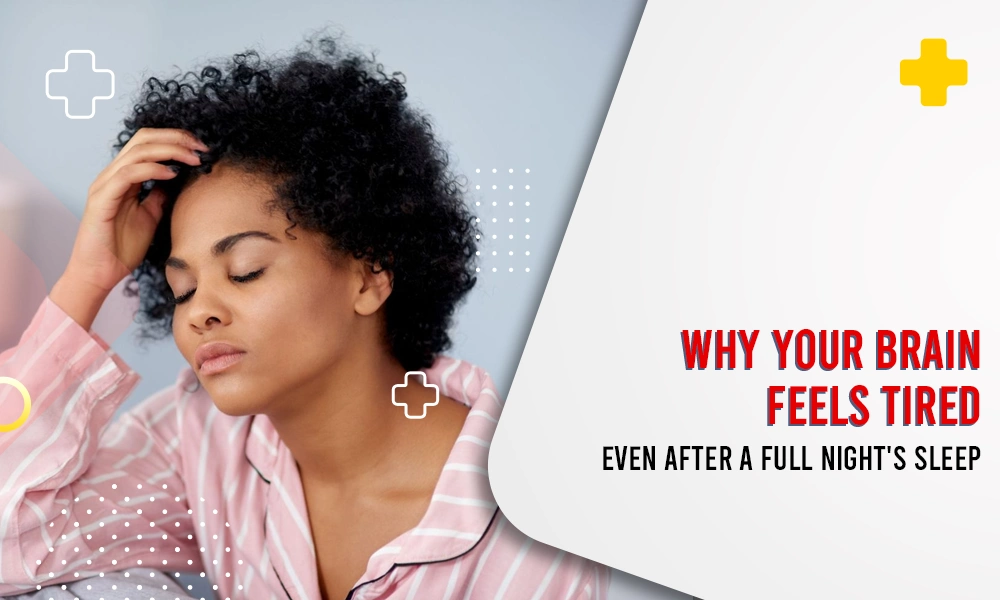
Here’s the thing nobody tells you insomnia isn’t just “I can’t sleep.” Sometimes you sleep fine, technically. Seven, eight hours even. And you still wake up feeling like you got hit by a truck. That’s a weird one to explain to people. “I slept, but I didn’t really sleep.” Sounds contradictory. It kind of is.
This is actually one of the more common symptoms that people miss completely feeling tired after a full night’s sleep. You’d think eight hours means you’re covered. Not always. Sleep quality matters just as much as sleep quantity, maybe more. Other symptoms include lying awake forever before falling asleep, waking up multiple times a night, waking up way too early, irritability, trouble concentrating, and just this general heaviness during the day that coffee doesn’t really fix.
I used to think sleeplessness meant lying awake for hours. Turns out it can also mean falling asleep fine but waking up at 3 am and just… being awake. Fully awake. Mind racing about nothing in particular. Then somehow falling back asleep an hour before the alarm, which honestly makes things worse.
Difficulty falling asleep is only one piece of it
People associate this mostly with difficulty falling asleep, and yes, that’s part of it. You lie there, you’re tired, your body should just switch off-but it doesn’t. But there’s also the staying-asleep problem. And the waking-up-too-early problem. And the “I don’t even know what my sleep is doing anymore” problem, which isn’t an official medical term but it should be.
Some nights I fall asleep in ten minutes and still wake up groggy. Other nights I toss around for two hours and somehow feel okay the next day. There’s no consistency, which is maybe the most frustrating part.
Diagnosis
There’s no blood test for this, which surprised me the first time I looked into it. Mostly it’s questions. How long have you been sleeping badly, how many nights a week, does it affect your day, do you nap, what’s your schedule like. Sometimes they’ll have you keep a sleep diary for a couple weeks, which sounds tedious but apparently gives a clearer picture than just describing it from memory.
Sometimes they’ll check for other things first: thyroid issues, sleep apnea, restless leg disorder because insomnia can be a symptom of something else rather than the main problem. A sleep study might come into play if they suspect something like apnea specifically.
Mostly though, for a lot of people, it’s just a conversation with a physician and some basic screening. Doesn’t have to be this huge clinical process unless it’s been going on for a long time.
The daytime fatigue is where it really gets you
Not sleeping at night is annoying. But daytime fatigue from poor sleep that’s where life actually starts falling apart a little.
You’re in a meeting and someone’s talking and you just zone out. Not because you’re bored. Because your brain physically cannot hold onto the thread of what’s happening. Or you’re driving and you realize you don’t remember the last two minutes of the road. That’s scary when you think about it, but we mostly just shrug it off and blame Monday.
There’s a real link between insomnia and sleep quality, and how both of those mess with how sharp you feel during the day. It’s not just “feeling tired.” It’s slower reaction time, worse memory, mood swings that seem to come out of nowhere.
How does poor sleep mess with your brain?
Your brain apparently uses sleep to clean itself. Like, actually flush out waste products that build up during the day. There’s research on this about the glymphatic system, which sounds made up but isn’t.
So when sleep is bad, that cleanup doesn’t happen properly. Which maybe explains why bad sleep and brain fog seem to travel together so much.
Sleep and cognitive performance are tied together tighter than most people realize. Decision making, focus, even how you regulate emotions all of it dips when sleep is off. You’re not imagining being more irritable after a bad night. That’s real.
How to manage insomnia?
I’m hesitant to give a neat list here because honestly nothing about this feels neat when you’re living it.
But a few things that actually seem to help, at least some of the time:
- Keeping a consistent wake-up time, even on weekends. Not the sleep time, the wake time. That one apparently matters more than people think.
- Cutting caffeine earlier than you’d expect is actually earlier, not just “not after dinner.”
- Getting light in the morning, real daylight, not just turning on a lamp.
- Not lying in bed wide awake for hours. If you’re not asleep in like 20-25 minutes, get up, do something boring, come back later.
And honestly; sometimes just accepting that tonight might be a bad night helps more than fighting it. The fighting makes it worse somehow. If it’s persistent though, weeks-persistent, that’s usually when it’s worth talking to an actual physician instead of just Googling at 2 am.
Final Thoughts
What makes this so exhausting isn’t just the physical tiredness. It’s the mental spiral that comes with it: worrying about not sleeping, which makes sleeping harder, which makes the worrying worse. It’s a loop. A dumb, frustrating loop.
But it’s also not permanent for most people. Sleep patterns shift. Stress passes. Habits change slowly and sometimes sleep just comes back on its own, without you even noticing exactly when it happened.
Frequently Asked Questions
1. Is insomnia the same as just having a bad night's sleep?
Not really. One bad night is normal. Insomnia is more about it happening repeatedly, over weeks.
2. Can you have insomnia even if you sleep 7-8 hours?
Yes. If the sleep isn’t restful, quantity doesn’t fix it.
3. What are the different types of insomnia?
Mainly short-term vs chronic, and trouble falling asleep vs trouble staying asleep.
4. Does insomnia affect memory and focus?
Yes, lack of sleep heavily affects concentration, memory and focus.
5. When should I actually see a physician about it?
If it’s lasted a few weeks and is affecting your daily life, that’s usually the point to check in with someone.