I’ve been thinking about this a lot lately. Not in a neat, organized way. Just… noticing how many people in the sector keep saying the same thing. They’re wiped. Not just sore feet. Properly wiped.
Warehouse and distribution center work, physical and mental fatigue, and German Logistics Workers that whole mix keeps coming up when you talk to people who’ve done time in the big hubs around places like Frankfurt, Hamburg, or the Ruhr. And honestly, it’s not only a German thing. Readers in the US and UK will recognize it immediately. Same conveyor belts. Same pressure. Same 3 a.m. coffee that doesn’t quite hit.
Why the fatigue thing actually matters here
It’s easy to shrug it off. “It’s just hard work.” Sure. But warehouse and distribution center work, physical and mental fatigue, German logistics workers aren’t some abstract HR poster topic. When you’re lifting, scanning, and walking miles of aisle every shift, the body keeps score. And the mind does too, even if nobody wants to say that out loud.
I talked to a guy once, okay, more like overheard at a service station near a big depot, who said he used to fall asleep at red lights on the drive home. Not proud of it. Just tired. That’s the kind of stuff that sits with you.
Logistics workers in Germany deal with tight delivery windows and seasonal spikes that don’t care how you slept. The pace doesn’t slow just because your brain is foggy. And warehouse workers in Germany often get the double hit: physical load plus the mental grind of constant targets.
Some days it feels manageable. Other days you wonder how anyone does this for years.
Shifts mess with sleep more than you’d think
Night work. Early starts. Rotating rosters. You know the drill.
How Shift Work Can Disrupt Sleep yeah, that’s the boring title version. The real version is: your body still thinks it’s daytime when you’re trying to crash at 9 a.m. with the sun blasting through cheap blinds and the neighbour’s dog going off.
Warehouse shift work turns your internal clock into something unreliable. You sleep, but it’s not the deep kind. Or you sleep four hours and call it fine. It isn’t fine. Logistics shift workers know this. They just keep going because the schedule is the schedule.
I keep flipping between “just push through” and “this is unsustainable.” Both feel true depending on the day.
Nightwork fatigue hits different. You’re fighting biology. Your body wants melatonin and darkness; the warehouse wants throughput and fluorescent lights. Shift work fatigue builds quietly. One bad week turns into a bad month and suddenly coffee is a personality trait.
Sleep deprivation shows up in weird ways. Snapping at people. Forgetting simple sequences. Staring at a handheld scanner that you’ve never seen before.
Focus goes first, then everything else
The Effects of Fatigue on Focus and Alertness again, sounds clean on paper. In practice it’s messier.
You miss a label. You put a pallet in the wrong bay. You nearly reverse into something you definitely saw two seconds earlier. Reaction time drops. Decision-making gets sloppy. Not because you’re careless. Because you’re running on empty.
Warehouse and distribution center work, physical and mental fatigue, German logistics workers when that combination stacks up, even simple tasks start feeling heavy. The brain wants a break the body can’t take yet.
Distribution center workers talk about the afternoon wall, or the 4 a.m. wall on nights. Freight workers in Germany on long-haul routes feel a version of it, too. Delivery workers in Germany doing multi-drop rounds with traffic and tight slots… same story, different vehicle.
I’ve heard people say “I’m fine” while clearly not fine. We all do that. Pride, or just not wanting the conversation.
Workplace fatigue isn’t dramatic most of the time. It’s quiet. It’s the slow leak.
So what actually helps (sort of)
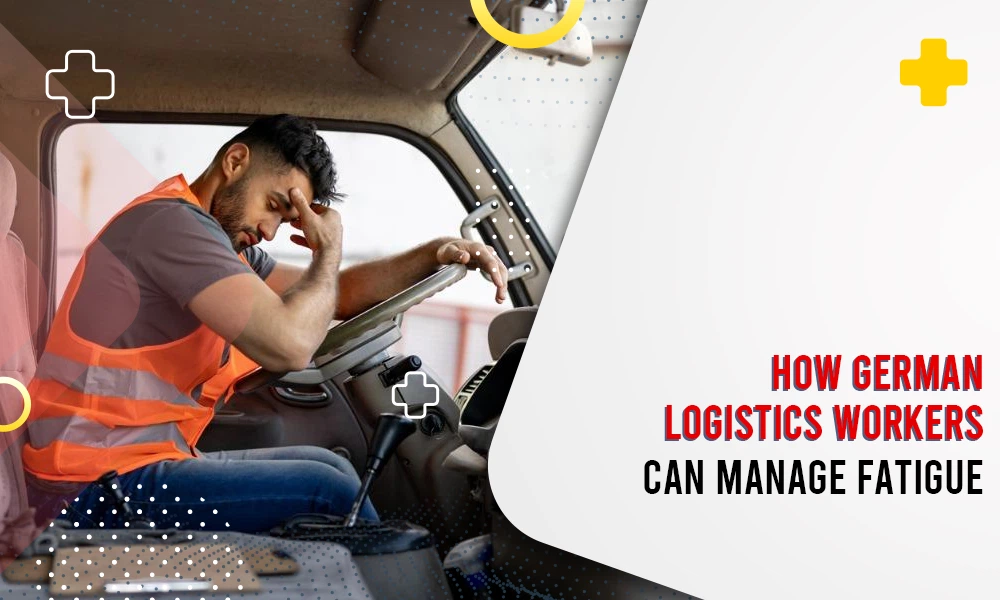
How German Logistics Workers Can Manage Fatigue. I don’t love how neat that sounds. There isn’t one clean fix. There are small things that stack, and some days none of them work, and that’s also real.
Warehouse and distribution center work, physical and mental fatigue, German logistics workers managing that means looking at sleep first, even when the roster fights you.
Try keeping the bedroom dark. Blackout curtains if you can swing them. Earplugs. Phone face-down. Not revolutionary. Still easy to skip when you’re exhausted and just want to scroll for twenty minutes that turns into an hour.
Some people swear by a short nap before a night shift. Others say naps make them feel worse. Both can be true. Bodies are inconsistent like that.
Food matters more than we admit. Heavy greasy stuff right before trying to sleep? Bad idea. Light protein, something simple. Hydration without overdoing coffee after a certain point. Easy to say. Harder when the canteen options are what they are.
Movement outside work helps some people. A short walk. Stretching. Not a full gym-hero routine, just enough to tell the body the shift is over. Logistics worker fatigue doesn’t always respond to more exercise, though. Sometimes rest is the actual answer, and the fitness advice feels tone-deaf.
Talking to the supervisor about swap preferences or consecutive nights… mixed results. Some places listen. Some don’t. The logistics workforce in Germany is huge, and not every site runs the same way. Worth asking anyway. Worst case, you already knew the answer.
Warehouse and distribution center work, physical and mental fatigue, German logistics workers. I’ve repeated that phrase in my head while writing this because it keeps circling back. The physical side (sore back, heavy legs) and the mental side (irritability, brain fog) feed each other. You can’t really separate them cleanly.
One more thing that drifts in and out of my mind: boundaries with overtime. Easy money until it isn’t. Then you’re too tired to enjoy the extra pay.
When the sleepiness doesn’t leave
When Persistent Daytime Sleepiness Needs Attention, this is the part people delay.
If you’re still exhausted after days off, or you’re nodding off in situations that should feel awake, or your mood has been flat for weeks… that’s not just “busy season.” That’s a signal.
Could be the roster. Could be something medical. Sleep apnea shows up more than people realize in physical jobs. Or just accumulated debt your body won’t ignore forever. I’m not a doctor. I’m just saying don’t keep white-knuckling it forever if the tiredness feels different from normal post-shift tiredness.
Warehouse and distribution center work, physical and mental fatigue, German logistics workers when that load stays high for months, the recovery window shrinks. You need more rest than the calendar offers. That’s the trap.
Sometimes a GP chat clears things up. Sometimes it’s just permission to take the tiredness seriously instead of joking it away in the break room.
Sleep and the wider well-being bit
Supporting Better Sleep and the Workplace Well-being sounds like a corporate slide. I’ll try not to make it one.
Small, consistent habits beat big dramatic overhauls. Same wind-down routine when you can. Cooler room. Less blue light if you’re the type who can put the phone down. (I’m not always that type.)
Employers could help with better break design, realistic pacing, and fewer back-to-back nights, and some German sites are better at this than others. Fatigue management isn’t soft. It’s safety. Forklifts and fatigue don’t mix.
Warehouse and distribution center work, Physical and mental fatigue, German logistics workers last time I’ll lean on that exact string, I think. Or maybe not. The point is the work is demanding by design. The fatigue is predictable. Pretending otherwise helps nobody.
Warehouse fatigue is real. You feel it in your joints and behind your eyes. Some weeks you manage it. Some weeks it manages you. That’s the uneven truth of it.
I’m not wrapping this up with a tidy bow. There isn’t one. You try a few things. You sleep when the roster lets you. You notice when the fog gets thicker than usual. And you remember that being tired after this kind of work doesn’t mean you’re weak. It means the job is heavy. Physically. Mentally. Both.
If you’re reading this after a long shift, maybe just drink some water and get horizontal when you can. The rest can wait until tomorrow. Or the next rest day. Whichever comes first.
Frequently Asked Questions
1. Why are logistics workers so tired all the time?
Long shifts, physical work, irregular schedules and disrupted sleep can all contribute to tiredness.
2. Can better sleep alone fix logistics worker fatigue?
It helps a lot, but roster design and workload still matter. Sleep isn’t magic.
3. Should I see a doctor about constant daytime sleepiness?
If rest days don’t help and it’s affecting focus or mood, yes. Keep it simple and get it checked.
4.Do short naps before night shifts actually work?
For some people yes, for others they feel groggy after. Test it on a low-stakes day.
5. Can night shifts affect sleep quality?
Yes. Daylight, night and disruption of the body’s natural sleep cycle may make it more difficult to sleep during the day.