
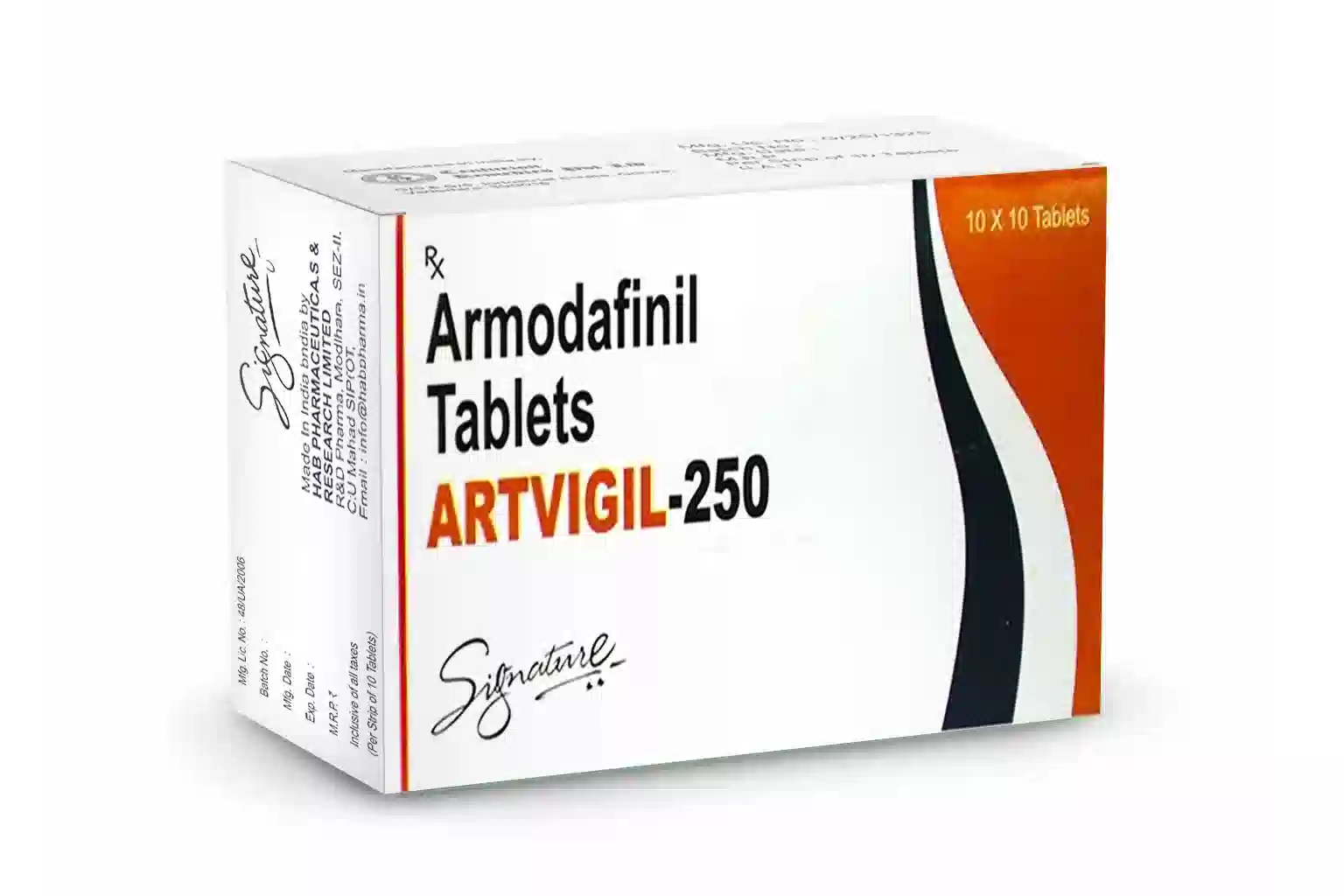
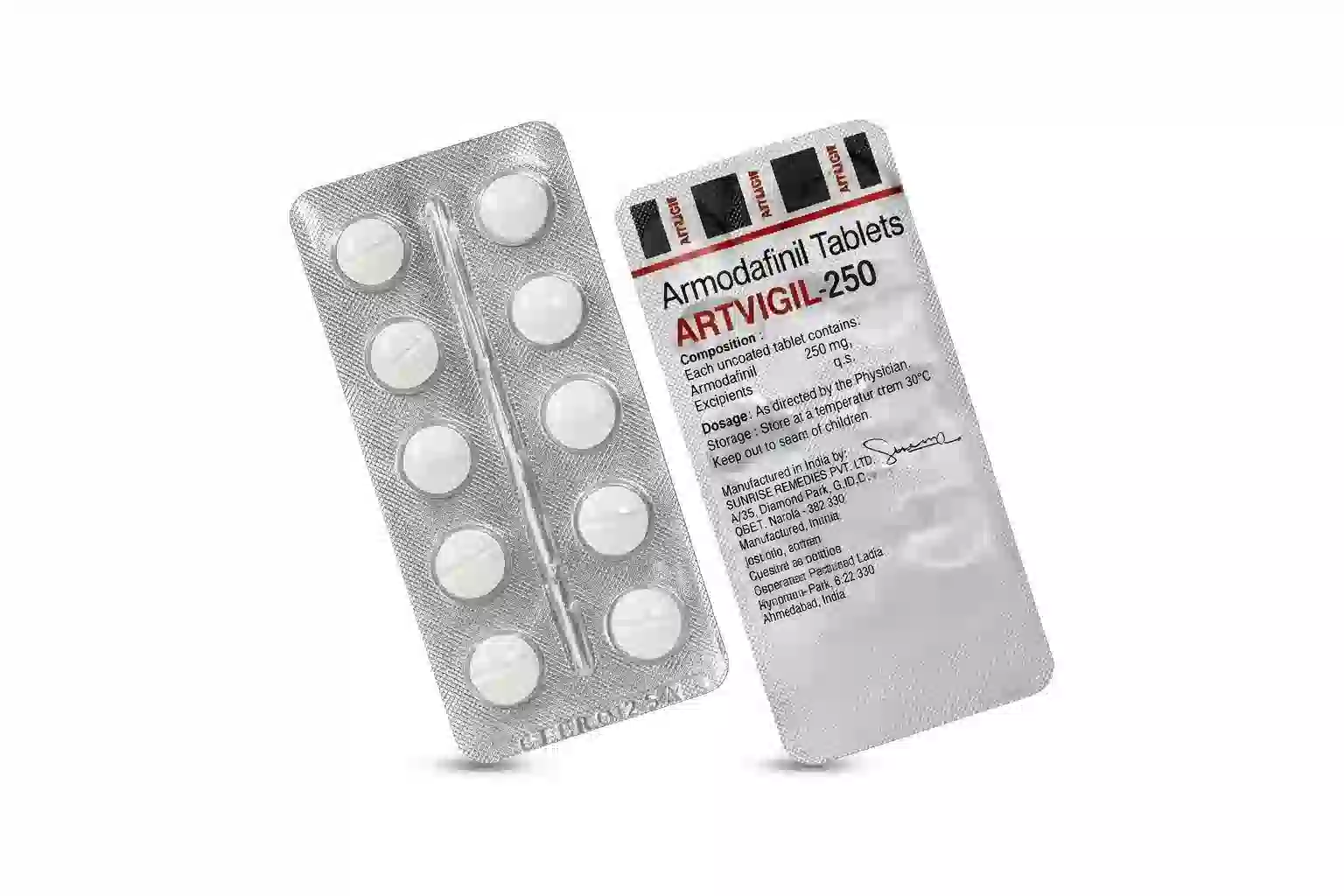
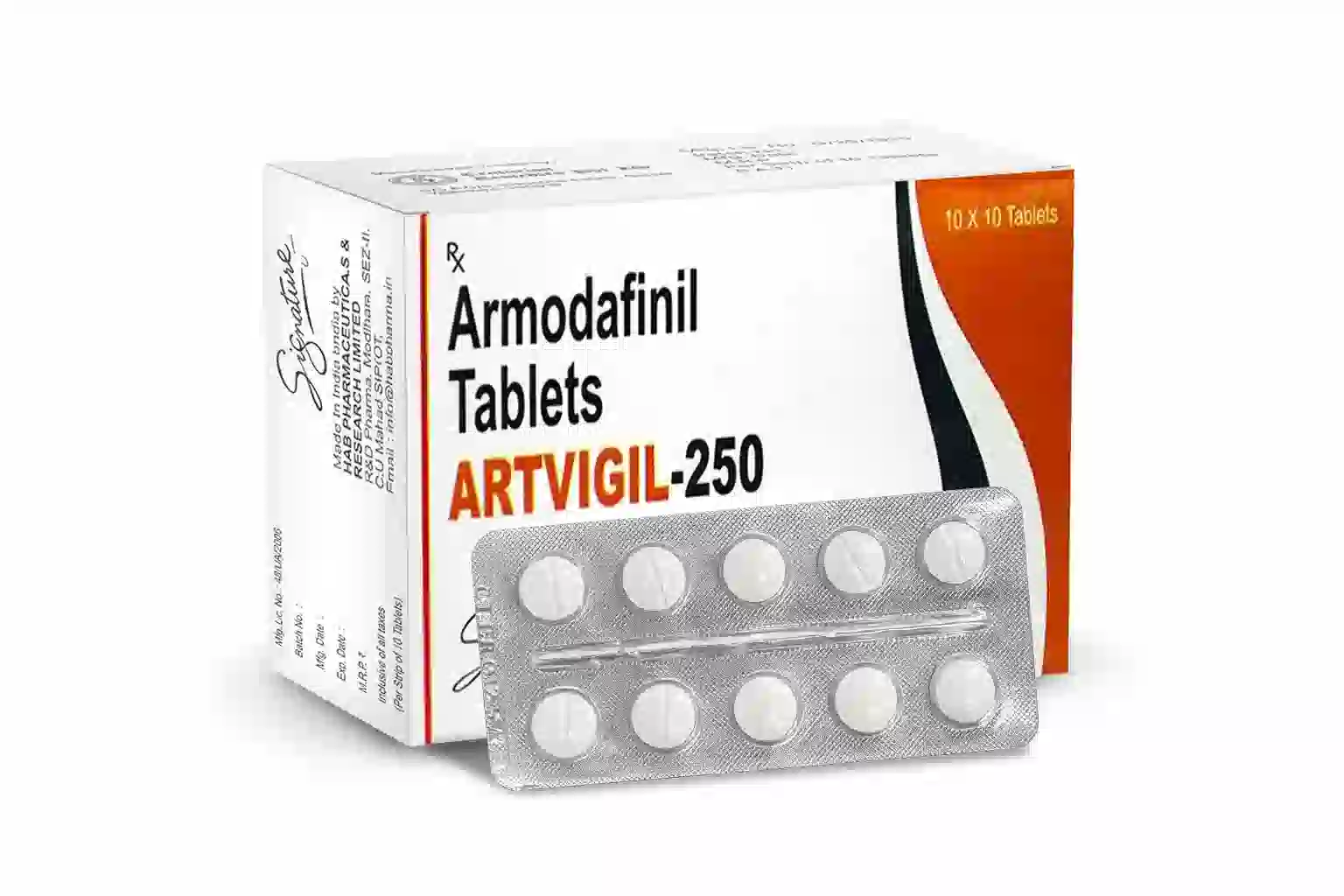
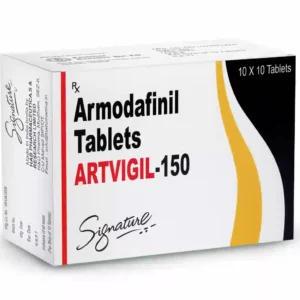
Artvigil 250 mg is a formulation of Armodafinil, manufactured by HAB Pharmaceuticals. It belongs to the wakefulness-promoting agent drug class. It is used to treat the symptom of excessive daytime sleepiness in certain sleep disorders. It works to make patients stay awake and alert during the day, but does not treat the underlying cause of the sleep disorder.
MECHANISM OF ACTION
Armodafinil binds to the dopamine transporter that blocks the reabsorption of dopamine by the neurons. Since there is a larger amount of dopamine in the brain synapses there is enhanced alertness and focus. Aromadinil targets the tuberomammillary nucleus (TMN) and some other regions that regulate the natural sleep-wake cycle. It also has secondary effects on neurotransmitters like serotonin, norepinephrine, histamine, orexin, etc.
Key Features
| About Artvigil 250 mg | |
| Drug class: Wakefulness promoting agent | |
| Chemical class: Diphenylmethanes |
| Product details | |
| Active Ingredient | Armodafinil |
| Inactive Ingredients |
|
| Dosage Form | Tablet |
| Route of administration | Oral |
| Packaging | Blister Pack |
| Pack size | 10*10 |
| Strength | 250 mg |
| Used for | Excessive sleep disorder |
| Approximate Onset of action | 30 to 60 minutes |
| Duration of action | 10 to 12 hours |
| Manufacturer | HAB Pharma |
| Shelf life | 24 months after the manufacturing date |
| Storage Instructions | Store at room temperature away from sunlight and moisture |
INDICATIONS
Artvigil 150 mg is used for:
- Narcolepsy: Artvigil 150 mg helps reduce excessive daytime sleepiness and sudden sleep attacks in patients dealing with Narcolepsy.
- Obstructive Sleep apnea: Artvigil 150 mg is used alongside other therapies like CPAP to treat persistent daytime sleepiness.
- Shift Worker Sleep Disorder: Artvigil 150 mg helps improve alertness and reduce sleepiness in people working odd shifts.
- Enhanced productivity in work, studies and daily activities.
- It also helps for better focus, alertness and mental performance.
SIDE EFFECTS
Common:
- Headache
- Nausea
- Dizziness
- Insomnia
- Anxiety
- Dry mouth
- Decreased appetite
Less common but serious:
- Serious skin reactions (Stevens-Johnson syndrome, DRESS)
- Psychiatric effects: agitation, hallucinations, mania, suicidal ideation
- Cardiovascular effects: elevated blood pressure, palpitations, arrhythmia
- Angioedema/anaphylactoid reactions (rare)
INTERACTIONS
- Hormonal contraceptives: effectiveness may be reduced (CYP3A4 induction); additional non-hormonal contraception advised during and for one month after treatment
- CYP3A4 substrates: may lower plasma levels of drugs like cyclosporine or certain corticosteroids
- CYP2C19 substrates: may raise plasma levels of drugs like phenytoin, diazepam, or propranolol
- Warfarin: may require closer INR (International Normalized Ratio) monitoring
- Other CNS stimulants: increased risk of overstimulation or cardiovascular strain
- Alcohol: may mask underlying sleepiness or compound side effects; not recommended
PRECAUTIONS & WARNINGS
Cardiovascular
- Use cautiously in patients with hypertension, arrhythmia, recent MI, or left ventricular hypertrophy
- Regular BP and heart rate monitoring recommended, especially at treatment initiation
Psychiatric
- Can cause or worsen anxiety, agitation, mania, hallucinations, or suicidal ideation
- Caution in patients with a history of psychosis, bipolar disorder, or depression
- Not recommended in patients with a history of stimulant or substance misuse
Dermatologic
- Rare but serious risk of Stevens-Johnson syndrome, TEN, and DRESS syndrome
- Discontinue immediately at first signs of rash, blistering, or fever with rash
Hypersensitivity
- Angioedema and anaphylactoid reactions have been reported; requires immediate discontinuation and medical attention
Hepatic/Renal Impairment
- Dose reduction generally recommended in moderate-to-severe hepatic impairment
- Caution advised in severe renal impairment due to limited data
Pregnancy & Breastfeeding
- Not recommended during pregnancy unless clearly necessary
- Hormonal contraceptive effectiveness may be reduced; additional contraception advised
- Not recommended while breastfeeding due to insufficient safety data
Pediatric Use
- Not approved for use in children or adolescents
Elderly Patients
- May require lower doses due to reduced drug clearance
Driving & Operating Machinery
- Patients should assess their own alertness before driving, despite the wakefulness-promoting effect
Sleep Disorder Management
- Does not replace standard treatments like CPAP for OSAHS; adjunct therapy only
- Not a substitute for adequate sleep
Contraindications
- Known hypersensitivity to armodafinil, modafinil, or tablet excipients
CONCLUSION
Artvigil 250 mg offers a reliable option for managing excessive daytime sleepiness linked to narcolepsy, obstructive sleep apnea, and shift work sleep disorder. Its dopamine- and orexin-modulating mechanism supports sustained wakefulness with a relatively favorable safety and abuse-potential profile compared to traditional stimulants. However, careful patient selection is essential; particularly regarding cardiovascular health, psychiatric history, and pregnancy status. The medication should only be used under proper medical supervision as an adjunct to, not a replacement for, primary treatment of the underlying sleep disorder.
FAQs
1. What is the use of Artvigil 250 mg?
Artvigil 250 mg is used for the treatment of excessive sleep disorders.
2. Can children use Artvigil 250 mg?
No. Artvigil 250 mg cannot be used by children under the age of 18 years.
3. What are the common side effects?
The common side effects of armodafinil are headache, nausea, dizziness, nervousness, etc.
4. Can Armodafinil cause hypersexuality?
Yes. Although rare, armodafinil may cause hypersexuality.
5. What should be done in case of overdose?
In case of overdose, seek immediate medical help or consult a physician.
Anna Meyer –
Artivigil 250 mg makes my days. I found out for myself as a proactive player in my team when I started to take this.!!