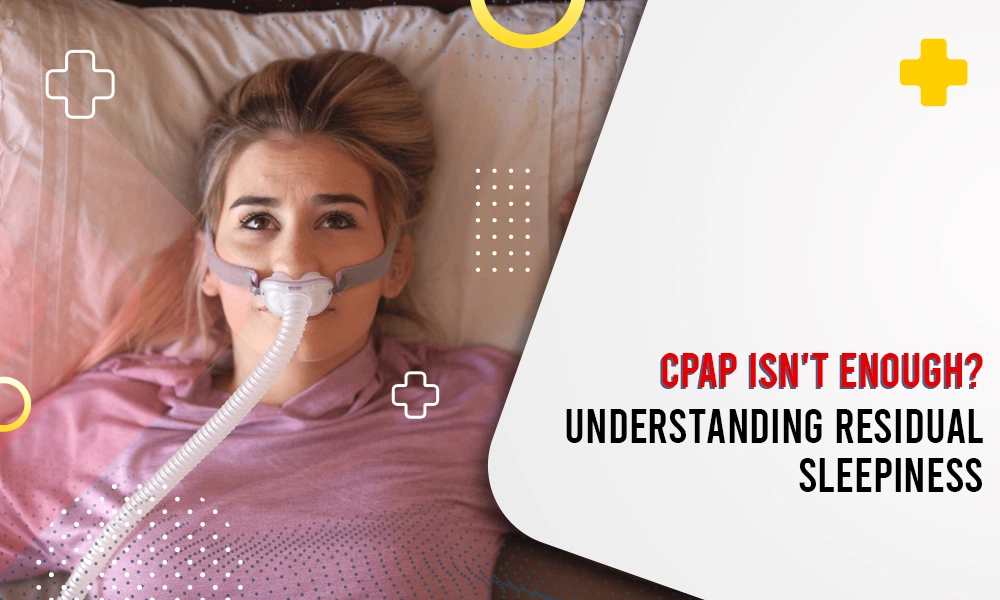
For most individuals who struggle with obstructive sleep apnea (OSA), when they are suggested by their GPs to start with CPAP therapy, they feel like they’ve made a turning point. It almost feels like the light at the end of the tunnel. Continuous Positive Airway Pressure, also called CPAP, is when a medical device is used to deliver a steady stream of pressurised air to the person through a mask to keep their airways open. Most individuals use it for their OSA and also if they snore.
OSA is a condition where the throat muscles keep repeatedly relaxing and collapsing. This process blocks an individual’s airways and causes their breathing to stop and start repeatedly. Due to this, individuals often end up experiencing a fragmented sleep, and this exact fragmentation is why so many people may snore, gasp, or experience extreme tiredness throughout the day. This is why CPAP therapy comes as such a saviour for most people. It’s able to deliver more oxygen, reduce the breathing interruptions, and also help OSA individuals get better sleep.
But sometimes, things don’t always pan out that way. Sometimes, people still end up waking up tired and exhausted. That’s what we help you decode in this article. We get into how CPAP works, why you may still be experiencing excessive daytime sleepiness, and what you can do or take to get relief from this situation.
The role of CPAP
The airway is staying open. The oxygen levels are probably fine. The apnea events and the choking-gasping-waking-up cycle are under control. But the sleepiness just stays. Medical professionals have a name for this, residual excessive sleepiness, sometimes shortened to RES or res-OSA depending on which paper someone happens to be reading. It’s more common than people assume.
There’s a study that gets cited a lot in sleep medicine circles, and it found that roughly 20 per cent of people using CPAP for around 8 hours a night, which is basically ideal use, still reported being excessively sleepy. Some more recent estimates put the number of people with leftover daytime sleepiness even higher, somewhere near half in certain patient groups, though that number moves around depending on how sleepiness is measured and who’s doing the measuring.
One theory, and it’s still somewhat a theory, is that years of intermittent low oxygen before diagnosis actually change the brain regions responsible for staying awake. Like the wiring gets worn down before the CPAP ever shows up to fix the breathing part. So the breathing gets corrected, but the daytime alertness circuitry is still catching up, or maybe never fully recovers. Nobody’s saying this with total confidence. It’s a hypothesis that keeps showing up in review articles.
Other times it’s simpler than that. Mask leaks. Inconsistent use. An undiagnosed second sleep disorder is sitting quietly underneath the first one. Depression, which loves to disguise itself as fatigue. Thyroid stuff. Medication side effects nobody bothered connecting to sleep. The point being, “still tired on CPAP” isn’t one single problem, it’s a bucket that a lot of different problems fall into.
It’s not always the CPAP machine
Most people, understandably, assume the fix is more CPAP. Better mask fit. Different pressure settings. Maybe a humidifier because the throat feels dry. And sometimes that actually works, which is worth saying, because it’s the first thing a sleep GP is going to check.
But when the machine data looks clean, when the apnea-hypopnoea index is low, when adherence reports show someone’s wearing the thing 7+ hours a night, and the sleepiness is still there, that’s usually when residual sleepiness gets brought up as its own separate issue. Not a CPAP failure. A leftover.
Modafinil and Armodafinil enter the picture
This is the part that tends to come up in conversations with a sleep specialist once the mechanical side has been ruled out. Modafinil and its close relative armodafinil are wakefulness-promoting medications, not sedatives or stimulants in the amphetamine sense, more like a nudge to the brain’s own alertness system. They were originally used for narcolepsy and later got studied specifically in people with OSA who were already using CPAP properly but were still sleepy during the day.
Armodafinil is actually just one half of modafinil, the more active half technically, the R-isomer, which is why it tends to last a little longer in the body across a single day. Some people respond better to one than the other, which is honestly true of a lot of medications and isn’t unique to these two.
Clinical trials going back almost two decades have tested this exact use case, people on CPAP with leftover excessive sleepiness, and the results have generally shown improvement on sleepiness scales like the Epworth Sleepiness Scale and better performance on tests measuring how long someone can stay awake during the day. Not a cure, not something that replaces the CPAP, more of an add-on for the sleepiness that sticks around despite everything else being managed.
It’s worth mentioning that regulatory history on this isn’t identical everywhere. Modafinil’s approval for this specific use was pulled back in parts of Europe over a decade ago after a risk-benefit review, while it remained an option in the US. That’s the kind of detail that matters if someone’s reading about this from outside the US, since guidance really does vary by country and by prescriber judgement.
Is CPAP actually working or not?
This is maybe the real question underneath all of it. CPAP fixes the breathing problem. That’s what it’s built for. It was never actually designed to directly fix daytime alertness, that improvement is more of a downstream effect of better sleep quality. For most people that downstream effect is enough. For a meaningful chunk of people, it isn’t, and that gap is exactly where residual sleepiness lives.
Which means “still tired despite CPAP” doesn’t automatically mean the treatment failed. It might just mean the sleepiness has its own separate cause that needs its own separate look, sometimes lifestyle-related, sometimes another sleep disorder entirely, sometimes something that responds to a wakefulness-promoting medication like modafinil or armodafinil once everything else has been ruled out.
The takeaway, if there is one, is probably just, don’t assume the CPAP machine is broken or useless just because the tiredness hasn’t fully lifted. It might be doing exactly what it’s supposed to do, and the sleepiness might just be a separate thread that needs pulling on its own.
Final Thoughts
Something a lot of people skip is actually keeping some kind of record before assuming residual sleepiness is the issue. Sleep apps, the CPAP machine’s own compliance data, or even just a notebook jotting down how many hours were slept and how the day felt afterward. GPs tend to ask for this anyway, so having it ready saves a round trip. It also helps separate “occasionally tired because of a bad night” from “consistently tired regardless of how the night went”, which is really the distinction that matters here.
There’s also a timing piece worth mentioning. Sleepiness right after starting CPAP is somewhat expected since the body’s adjusting to a new sensation, a new device on the face, and sometimes disrupted sleep just from getting used to the mask itself. That’s different from sleepiness that’s still hanging around after weeks or months of steady, comfortable use. The first kind usually settles on its own. The second kind is the one worth flagging.
Frequently Asked Questions
1. What is residual excessive sleepiness after CPAP?
It’s ongoing daytime sleepiness that continues even when CPAP therapy is working properly and apnea events are controlled.
2. Does this mean CPAP isn't working?
That doesn’t necessarily mean that the CPAP is not working. The CPAP device can still resolve your breathing issues, it’s just that you may need some extra help to stay alert during the daytime.
3. How are modafinil and armodafinil different?
Armodafinil is the longer-lasting active component of modafinil, so effects tend to stretch further across the day.
4. Are these medications a replacement for CPAP?
No, they’re typically used alongside CPAP, not instead of it, and only after mechanical causes are ruled out.
5. When should someone bring this up with a GP?
If sleepiness continues after months of consistent, well-fitted CPAP use, it’s worth raising as its own issue.