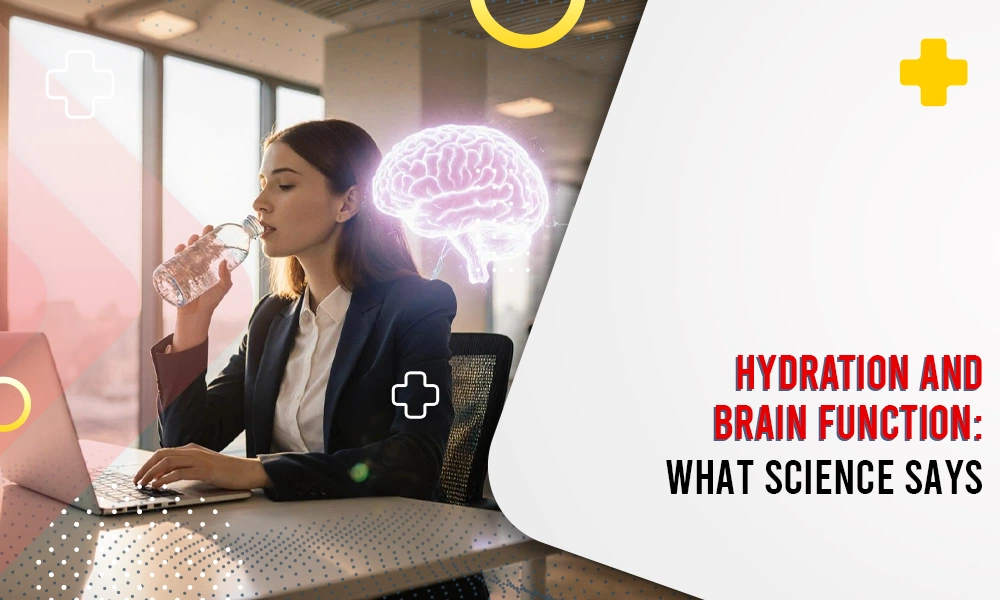
The brain is composed of about 75% water, which is more than most other organs of the body. That is the reason that sometimes fluid deficits are not noticed for a while and are first observed as mental/brain fog. Germany is a temperate country but is still suffering from the growing incidence of heatwaves, an ageing population, and a culture of strong coffee, beer, and mineral water. Hydration is only beginning to receive its due attention in the arena of public health.
Hydration Patterns in Germany: A Mixed Picture
The assumption is that Germans drink a lot of water, and the population level data partially confirms this. The European Hydration Research Study (EHRS) recorded the water intake of 573 healthy adults in Germany, Spain, and Greece over a period of seven days and determined their urine and dietary status by urine and dietary analysis, respectively, revealing that the German subjects consumed significantly more water than their Spanish or Greek peers while also having lower urine osmolality, indicating greater hydration. A nationwide study of 1,528 German adults in a separate study showed median water consumption for men of 2,483 ml/day and for women of 2,054 ml/day.
But the news is not all good. The EHRS data showed that about 60% of the German participants are well hydrated over a period of 7 days, about 20% are dehydrated, and about 20% are overhydrated. This is a significant proportion of participants who fall into a gray area between being well-hydrated (EUS-FAF) and over-hydrated on a regular basis. A daily assessment of the same population showed that 37% of men and 22% of women consumed less water than the EUS-FAF suggested adequate intake, and 16% of the males consumed less than the adequate intake every single day assessed. Interestingly, older German survey data from 2011 reports even lower fluid consumption (around 1,526 ml/day in men and 1,214 ml/day in women), although more recent studies with different methodological approaches have higher figures, indicating that there may have been a real improvement but that there also may be some measurement variation.
Heat, Aging, and Brain-Related Risk in Germany
The issue of hydration is becoming a greater challenge in Germany in particular. In the cities of Frankfurt, Gießen, and Marburg, emergency departments of hospitals have regularly been flooded by heat during recent heat waves, the most common complaints being due to dehydration, heat stroke, and circulatory problems. The researchers at Dresden University Hospital identified that a measurable, statistically significant increase in hospital admissions for dehydration and other related conditions occurred when temperatures had reached over 23°C every day. Another national study was published in Deutsches Ärzteblatt International, which revealed that heat exposure was significantly associated with an increase in the risk of emergency hospitalisation in children and in persons aged 65 years and older.
Older people are particularly susceptible because these factors are directly related to brain health. A person’s sense of thirst is diminished as they get older, the ability of their kidneys to concentrate urine is also reduced, and often medications (including diuretics) that promote fluid loss are administered. This population has been found to have a higher risk of hospitalization and death for temperature-related illnesses, in part because of the fact that they have a greater risk of dehydration due to their reduced capacity for recognizing and responding to thirst, which increases their risk of dehydration secondary to their cognitive impairment, and their cognitive impairment increases their risk of dehydration.
The Medical and Scientific Link Between Dehydration and Brain Function
There is a clear relationship between hydration and cognition, although the extent of this relationship varies by the method of inducing dehydration and the method of measuring dehydration.
Mood is affected before performance. A review published in Annals of Nutrition and Metabolism found that even healthy young adults who demonstrate minimal changes on cognitive and other tests experience reliable changes in mood with mild dehydration, including increased sleepiness, fatigue, and reduced well-being. This indicates that subjective dehydration, which is the sense of being dehydrated, may be the first sign of dehydration before the objective signs of cognitive dysfunction.
Cognitive effects seem to be found at surprisingly low levels. The only previous study to examine mild, non-heat-induced dehydration (1-2% loss of body water) identified measurable impairments in mood and memory in healthy young men. Other studies suggest that a more consistent marker of cognitive decline is 2% loss of body water; the cognitive changes are poorer concentration, slower reaction times, short-term memory issues, and negative mood changes.
Both the mechanism and the structure of the brain are involved in the mechanism. Dehydration disrupts the functionality of the blood-brain barrier, raises its permeability, and lowers blood flow to certain brain areas. Dehydration working groups have reported changes in brain structure and function in adolescents without any difference in cognitive function. It suggests the brain adapts by working harder, which is not an option for more vulnerable individuals.
The vulnerability varies from one life stage to another and between the sexes. According to the literature from the life span, children and older adults (low cognitive reserve and/or low physiological reserve) experience more predictable performance deficits due to mild dehydration than healthy, younger adults. Evidence also suggests sex differences. Women experience more fatigue, headaches, and concentration problems during mild dehydration, whereas men exhibit comparatively greater objective cognitive impairments, although this is not entirely consistent across studies. Exercise-induced dehydration can also be confounded with dehydration itself, causing cognitive impairments.
This is a serious medical issue of dehydration. In addition to minor, everyday dehydration, clinically relevant dehydration (caused by heat illness, kidney damage, or illness-induced loss of fluids) is linked to confusion and delirium. In extreme cases, it causes electrolyte abnormalities that can be life-threatening. These are reflected in German hospital use statistics directly during heatwaves.
Mitigation Strategies
For individuals:
Remember water consumption is a proactive, not reactive, approach. Thirst is a late indicator (particularly in older adults), and drinking water at regular intervals during the day is better than waiting until one is thirsty.
On hot days, drink more fluids before symptoms of dehydration become obvious, and as a low-cost, simple hydration sign, check the colour of the urine (light yellow = well hydrated).
For family/carers of older adults:
Offer liquids actively; don’t assume that thirst will make them drink, especially for those with reduced mobility or dementia.
Be alert for early signs of heat-related strain (confusion, dizziness, and reduced urination), and if new confusion occurs during the hot weather, consider that to be a hydration problem and give it immediate attention.
Postponing non-essential medical appointments and outdoor activities, particularly during peak heat hours, where feasible, is a tactic that has been specifically studied by German researchers and proven to be feasible and well accepted by both patients and providers.
Final Thoughts
The science is unanimous: drinking water is more than a matter of physical health; it’s a matter of mental health. In Germany, the picture shows good water consumption but with large disparities: a significant minority of adults are underhydrated on a typical day, the population is ageing with less-developed thirst reflexes, and the climate is increasingly providing more heatwaves with greater frequency and heat, increasing the strain on hospitals and vulnerable brains. Closing these gaps will take action at all levels (from the individual every day to the hospital infrastructure to the public health surveillance).
Frequently Asked Questions
1. Can mild dehydration affect brain function?
Yes. Dehydration (even slight) can reduce concentration, memory, attention, reaction time, and mood until the body is rehydrated.
2. Who is most likely to become dehydrated in Germany?
Older people, outdoor workers, athletes, children, and people with chronic diseases are high-risk groups, especially during summer heatwaves.
3. How much water should healthy adults drink daily?
Most healthy adults should drink enough fluid to keep their urine a light yellow and to adjust it for hot weather and for physical activity.
4. When should somebody seek medical care for dehydration?
Please see the general adequate intake (AI) values provided by the EFSA: 2.0 L/day for women and 2.5 L/day for men, with additional fluid requirements on top during hot weather, physical activity, or illness.
5. Are medications used to treat dehydration?
Drink water and unsweetened beverages, rather than coffee, soft drinks, or alcohol; while all of these beverages can help with hydration, they have their drawbacks (caffeine has a mild diuretic effect, and added sugar or alcohol is dehydrating).