
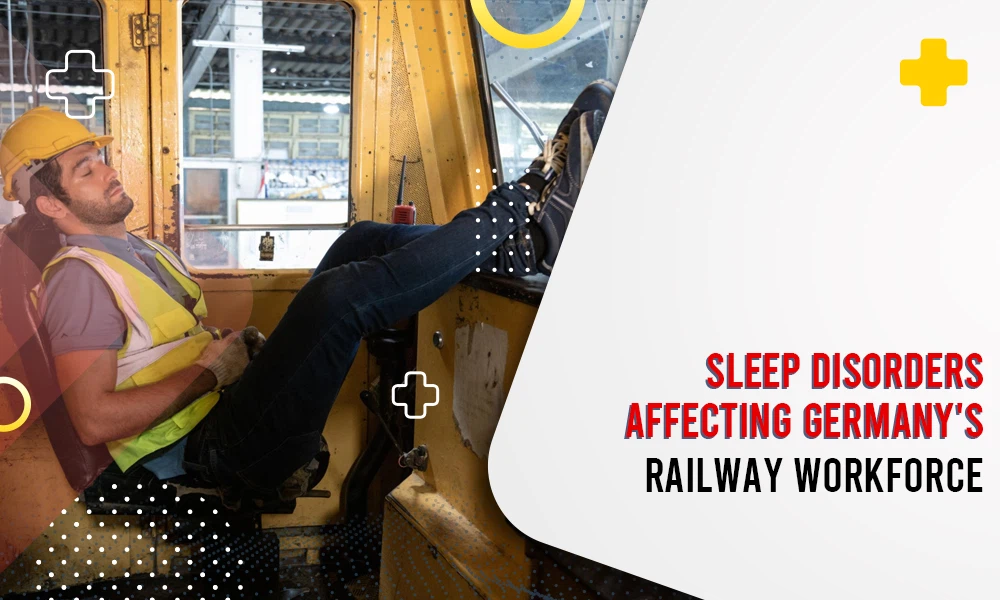
Germany runs on trains. That’s not really an exaggeration, the whole country’s rhythm depends on Deutsche Bahn showing up more or less when it says it will. But nobody really talks about the people driving those trains at 3am, half awake, running on two cups of bad canteen coffee and whatever sleep they managed to grab between shifts.
There’s a sleep disorder problem quietly sitting inside Germany’s railway workforce, and it doesn’t get anywhere near the attention it should. Honestly, when you start reading into it, sleep disorder complaints among rail crews come up way more often than most people would guess.
The Railway schedule
Train drivers don’t work normal hours. Nobody in rail does really. You’ve got early starts, late finishes, split shifts, and then night runs thrown in whenever the freight or passenger schedule needs it. The body doesn’t love that. At all.
Researchers who’ve looked into this, and there’s actually a decent body of European rail studies on it, keep landing on the same finding. Night and early morning shifts carry a much higher risk of severe sleepiness at work compared to regular daytime shifts, sometimes several times higher. It’s not a small difference either.
Train driver fatigue isn’t some rare occupational quirk. It shows up again and again in studies across different countries, Germany included, wherever irregular shift systems are the norm.
And when you’re moving a few hundred tonnes of train at speed, being foggy-headed isn’t just inconvenient. It’s the kind of thing safety boards write long reports about after the fact.
How does sleep get affected?
Say someone works a night shift, then flips to a morning one two days later. Their body clock doesn’t know what’s going on. It’s still trying to run on a normal day-night cycle while the work schedule keeps yanking it sideways.
This is basically the textbook description of shift work sleep disorder. You have trouble sleeping when you’re supposed to, trouble staying awake when you’re supposed to be alert, and it doesn’t resolve just because you’re used to shift work by now. Some people who’ve done rotating shifts for fifteen years still struggle with it. Tolerance isn’t really the word for it.
A lot of railway workers describe something similar even if they’ve never used that specific term. They just call it “always tired” or “never feeling rested even after a full night”.
There’s also the flip side of this, where a proper train driver’s sleep disorder isn’t always caused by the job. Sometimes the shift work just uncovers or worsens something that was already there.
Obstructive sleep apnea
This is where things get a bit more medical, and I think it’s worth mentioning because it gets missed a lot.
Obstructive sleep apnea and fatigue go together more than people realise, and rail workers are not exempt from this just because their tiredness gets blamed on shift patterns. Someone might assume their exhaustion is purely “the night shifts” when actually there’s an underlying breathing-related sleep disorder making things worse, layered right on top of the schedule chaos.
Screening for this in transport workers has become a bigger conversation in the US and UK too, especially after a few high-profile transportation incidents got traced back to undiagnosed sleep apnea in the operator. Germany isn’t immune to this either, even if the public conversation there is quieter about it.
Staying alert when your body wants to shut down
Staying awake during night shifts is genuinely one of the harder physiological tasks a person can be asked to do repeatedly. Caffeine helps a bit. Bright light helps a bit. Neither really solves it long term.
This is roughly where medications like modafinil and armodafinil come into the conversation, at least for people who’ve been formally diagnosed with a shift-work sleep pattern issue by a GP, not as some casual fix. These are wakefulness-promoting medications, originally developed for narcolepsy, that later got approved in various countries for people managing excessive sleepiness tied to irregular work schedules. Armodafinil is basically the more refined, longer-acting cousin of modafinil, same general idea, slightly different dosing profile.
GPs sometimes recommend one or the other depending on how long someone needs to stay functional and alert during a shift and how their body responds. Neither is a replacement for actual sleep, though, and that’s usually the part that gets lost when people hear “wakefulness medication” and think it solves everything. It doesn’t put back the hours of rest a body actually needs.
Railway worker fatigue management programmes in some countries have started incorporating medical screening alongside scheduling reforms, rather than just telling workers to “manage their sleep better”, which, let’s be honest, isn’t much of a solution when the roster itself is the problem.
The morning-after fog
Even when someone does sleep after a night shift, they often wake up feeling like they didn’t. That grogginess that lingers well past waking up, some researchers call it residual sleepiness, and it’s a real measurable thing, not just someone being dramatic about being tired.
For a railway night shift worker, this residual fog can bleed straight into their next shift if the gap between shifts isn’t long enough to begin with, which honestly happens more than it should given how tight some rosters are.
Excessive daytime sleepiness is the term that gets used clinically, and it covers this whole cluster, falling asleep unintentionally, struggling to stay alert during normal daytime hours, and feeling like you’re wading through fog by early afternoon. In train drivers specifically, this isn’t just an annoyance, it becomes a genuine operational risk factor that safety regulators in Germany and across the EU have flagged repeatedly over the years.
Barriers to railway healthcare
You must be wondering that if this causes such a surmountable problem, then why does it not get fixed? Part of the issue is structural. Railways run 24 hours, so someone has to be awake and alert at 3am regardless of what the human body prefers. You can’t really schedule around biology completely, not in an industry built on continuous operation.
Some German rail unions have pushed for better rest period rules and shift rotation designs that are less brutal on the body clock. Slower rotation, more predictable patterns, and longer gaps between night blocks are things that might help, but they’re not magic, though.
A sleep disorder doesn’t just vanish because a union negotiated two extra hours of rest between shifts. It helps, sure. But the underlying biological mismatch between a 24-hour railway and a human circadian rhythm doesn’t fully go away.
Medical screening for things like sleep apnea, better fatigue reporting systems without workers fearing they’ll lose shifts for admitting they’re exhausted, and realistic use of medication like modafinil or armodafinil under actual medical supervision, all of that stacks together into something that helps, even if none of it is a complete fix on its own.
The honest answer is probably that Germany’s railway workforce will keep dealing with some level of sleep disorder risk as long as trains run around the clock. Not every sleep disorder case will get caught early, and that’s just the reality of an industry this size. The goal isn’t eliminating it, but it’s about managing it better than it’s currently being managed.
Frequently Asked Questions
1. Is disrupted sleep from rotating shifts an actual diagnosable condition?
Yes, absolutely. Shift-work disorder is an actual condition that’s associated with work hours and work schedules that are not your typical 9-5.
2. Can obstructive sleep apnea be mistaken for regular fatigue in train drivers?
Often, yes. Many workers assume tiredness is just from shifts when apnea is a hidden factor.
3. Do modafinil and armodafinil cure sleep problems?
No, they manage alertness temporarily. They don’t replace actual restorative sleep.
4. What's that lingering grogginess after waking up called?
It’s often referred to as leftover morning fog, and it’s a real, measurable sleep disorder symptom.
5. Why is overnight rail work considered high risk for fatigue?
Because it fights the body’s natural circadian rhythm, which raises sleepiness and error risk significantly.